Rolandsgata
The CallerRolandsgata is a cul-de-sac in Bjørnstad whose oldest, last house belongs to Henry Beskow, Johnny Beskow’s ailing grandfather. The street links Johnny’s visits to Henry with his encounters with Else Meiner, and later becomes the site of Henry’s suspicious death and the police investigation. Its domestic scale makes the shift from routine visits and neighborhood taunts to violence and death especially stark.
Setting and built environment
The Beskow home stands at the very end of Rolandsgata. It is both the oldest house on the street and visibly out of step with the surrounding neighborhood: Asbjørn Meiner describes it as an old building from the period when asbestos tiles were used. The newer houses nearby are presented as part of a settled residential community. Asbjørn can identify neighbors by their homes and family connections, but Henry’s house remains a conspicuous exception, physically older and occupied by a man who rarely leaves.
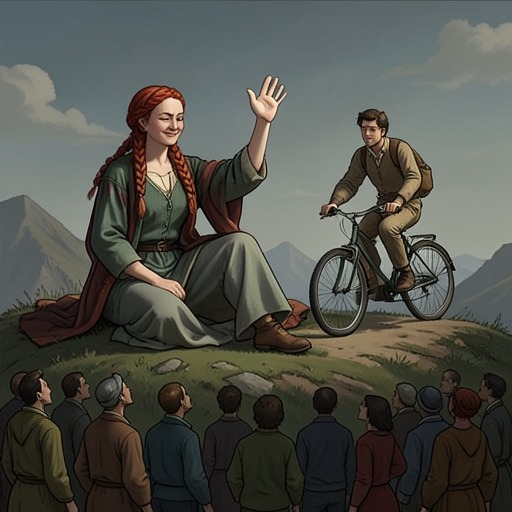
A small rocky knoll near Henry’s house gives Else a place to sit and watch the street. The raised vantage point turns an ordinary stretch of road into her territory: Johnny passes beneath her gaze on his moped, and she calls out insults. Later, the same street also brings the Meiner family’s large yellow house into the police’s view. Several old, broken-down Mercedes stand in its driveway, recalling Henry’s earlier description of the cars in front of the Meiner home as vehicles that had been there for years. The street’s houses are not interchangeable scenery; their age, upkeep, and positions help establish who belongs where and who is noticed passing by.
Johnny’s visits and the street’s routines
Johnny’s route along Rolandsgata is recurrent. He rides to the last house to see Henry, parks his moped, and goes inside to find his grandfather sitting in a wing chair with his legs supported. Henry has bad legs and arthritis that has stiffened his fingers; a home carer helps him get out of bed in the morning, and he seldom leaves the house. The contrast between Johnny’s repeated comings and goings and Henry’s confinement makes the house a fixed point in the boy’s life.
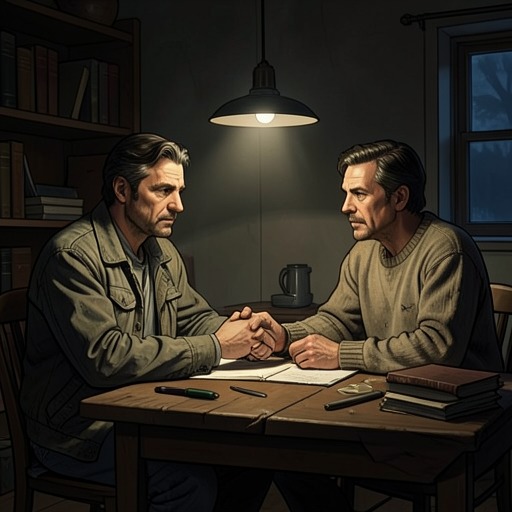
During one visit, Johnny prepares coffee for Henry, using the blue, two-handled cup his grandfather always drinks from. At the window, he asks about the red-haired girl he has seen outside. Henry identifies her as Else, the youngest Meiner, and points out the family’s yellow house and its long-neglected cars. Johnny draws a skull in the condensation on the glass after complaining about Else. The small gesture places his anger inside Henry’s home, alongside an attentive act of care: Johnny makes the coffee, sits with his grandfather, and clutches one of Henry’s arthritic hands. He is anguished by the thought of losing him and says confidently that Henry will not die soon; he also admits, through his distress, that he has nowhere else to go and no one waiting for him.
The visits continue in the oppressive heat of Henry’s small room. On another occasion, Johnny brings in the post and finds Henry sweating, struggling to shrug out of his knitted cardigan. Outside, Else again taunts Johnny as he rides by. He makes a deliberate effort to ignore her, telling himself that he will wait for the right time to retaliate. Rolandsgata is therefore both a family destination and a repeated point of contact in the feud: Johnny’s attachment to Henry draws him back, while the knoll and the Meiner house keep Else’s presence in view.
From neighborhood taunts to planned retaliation
The conflict does not remain confined to the street. Else lives in Bjørnstad and travels by bicycle; Johnny later identifies the route she is likely to take home after band practice at Hauger School. He approaches the Love Trail from the school grounds, pushes his moped past a barrier, and considers hiding in the thick bushes. His plan depends on knowing Else’s routine and on predicting that she will ride the path back toward Rolandsgata. The street thus marks the destination of her journey even when the confrontation itself moves elsewhere.
When Johnny lies in the bushes, he is scratched and stung by nettles and thistles, and Else bites his arm. He treats the encounter as a warning rather than the end of the dispute. Later, Konrad Sejer and Jacob Skarre go to the Meiner home to speak with Else. Asbjørn opens the door, angry about what has happened, and describes the street’s other households before pointing out Henry’s old house at the far end. He says that Henry never leaves and that a teenager on a moped comes and goes, identifying a pattern that Johnny’s private visits had made familiar to the neighborhood. Else gives the officers little information about the boy. The police inquiry turns Rolandsgata’s ordinary movements—who lives where, who visits Henry, and who passes through—into details relevant to an investigation.
Henry’s death and the return of the police
In mid-September, after a call about a suspicious death, Sejer and Skarre return to Bjørnstad. A patrol car is parked by the fence near the last house on Rolandsgata, and crime-scene officers are examining the perimeter. At first, one officer says, the injuries made it look as though someone had attacked Henry with a bat; inside, however, the house is orderly, with no signs of vandalism or theft. The place once entered by Johnny with a helmet under his arm is now approached as a crime scene.
In the overheated house, the investigators find Mai Sinok, Henry’s home carer, wrapped in a shawl despite the warmth. She points them toward the lounge, where Henry is slumped over the arm of his chair. One foot remains on the footstool and the other rests on the floor; there is blood around his mouth and chest, with some on the floor. His old green cardigan and oversized trousers, held up by a belt with an extra hole punched into it, preserve the signs of his frailty and weight loss. The initial appearance raises questions, but the supplied account does not establish a cause of death. The room’s heat, which had framed Johnny’s visits, now contributes to the investigators’ unsettling first encounter with Henry’s body.
About half an hour later, Johnny arrives on his moped. He stares at the patrol car, hesitates, then removes his red helmet and hangs it on the handlebar before standing confused in the driveway. Sejer recognizes him by the helmet’s little wings. The familiar approach to the grandfather’s house has become a threshold into police scrutiny: Johnny returns as he has before, but now Henry is dead and officers are waiting outside.
Narrative significance
Rolandsgata gathers several strands of the novel into one compact geography. The end-of-street house holds Johnny’s strongest attachment, while the nearby knoll and the Meiner home make his conflict with Else visible and recurrent. The route to the Love Trail extends that conflict beyond the street without severing it from the homeward journeys that shape Johnny’s plan. Finally, the police return to the same last house, transforming neighborhood knowledge into investigative context. Rolandsgata’s significance lies in this change of function: a place of routine visits and familiar insults becomes the setting where private vulnerability, retaliatory violence, and the uncertainty surrounding Henry’s death converge.